
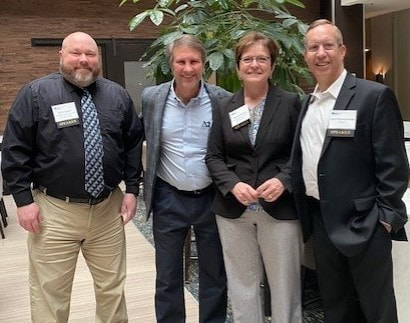
At a time when many communities across the state are encountering the challenge of how to renovate, refurbish and reuse existing older buildings – rather than demolish and build new – the presentation provided some much needed direction and guidance.
The OCCD Spring Meeting was well attended both in-person and virtually this year in its first hybrid meeting held in Columbus, Ohio. The Ohio Conference of Community Development, Inc. (OCCD), is a statewide member association of community and economic development professionals. OCCD members include cities, counties, nonprofits and consultants from across the State of Ohio. Since 1965, OCCD members have dedicated themselves to making their communities better places to live, work and enjoy life. Members are provided the opportunity to connect with professionals who understand the unique challenges of working in community and economic development programs. For more information about OCCD, visit their website at www.occd.org
Rich Ebert, CEP's new Executive Director shared his excitement recently saying, "Seeing lights on at Legacy Place in Urbana's Downtown warms my heart. The transformation of all three buildings has been amazing. The impact of this project on our community will be felt for many years to come. In all three building, the apartments are large and comfortable as well as cozy and clean. Residents coming to live in these apartments will be thrilled with the amenities and features along with the unique setting each is in. After touring the buildings, I've been most impressed with the attention to detail by the builders and designers. it will be an absolute asset to our greater community for years to come!"
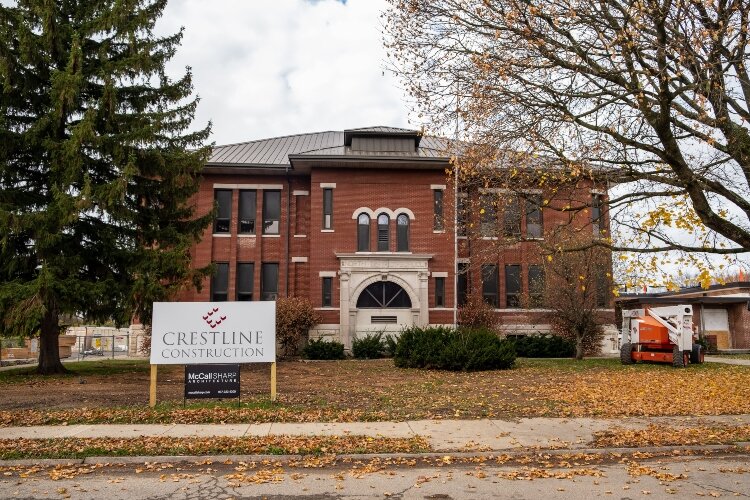
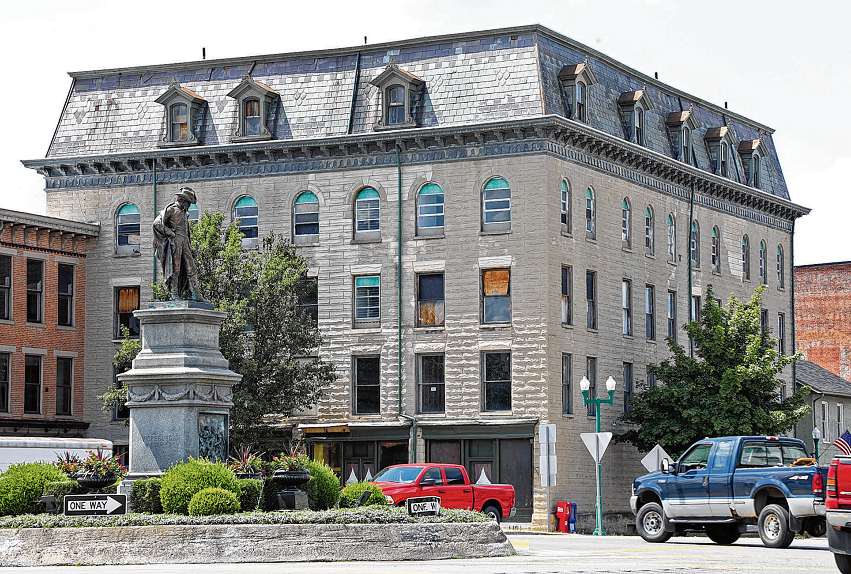
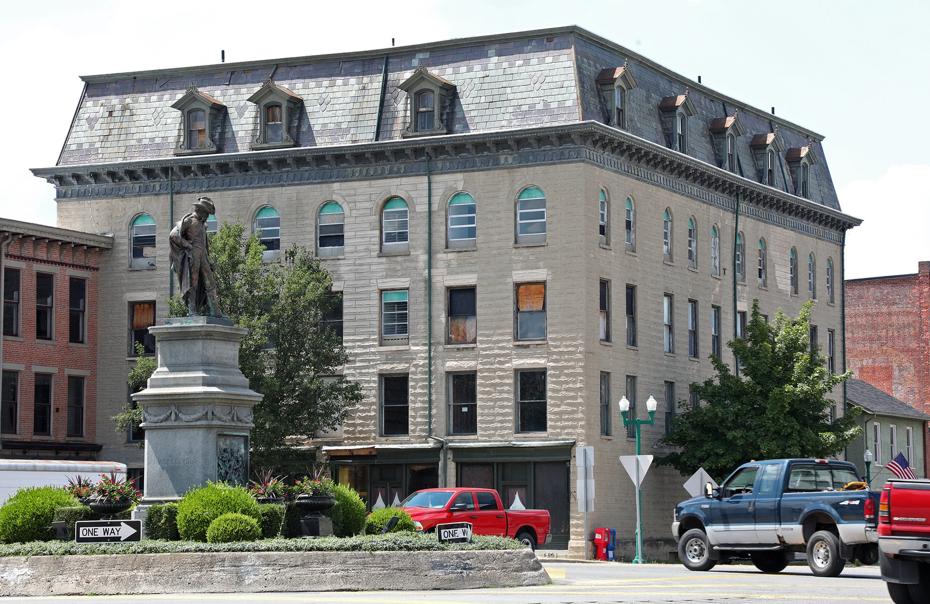
Legacy Place Apartments will be hosting Open Houses at all 3 locations on Monday, February 14th from 1:00pm until 6:00pm. Locations include: Legacy Place North, formerly North Elementary School (located at 626 N Russell Street, Urbana); Legacy Place South, formerly South Elementary School (located at 725 S Main Street, Urbana); Legacy Place Monument Square, formerly Douglas Hotel (located at 27 Monument Square, Urbana). The community is invited to come tour the facilities, hear about the history, and share their own stories surrounding these historic buildings. Parking will be limited at each location, and it is encouraged to utilize the shuttles from the Champaign County Community Building (located at 1512 South US-68, Urbana) that will be running between the three properties from 12:30 pm until 4:00 pm. For information on tours or leasing, contact [email protected]. First of Legacy Place Senior Living Apartments to Be Ready Mid to Late June; Tours Being Scheduled6/7/2021
Tours Available by Appointment
Seniors age 55+ who are interested in leasing a Legacy Place apartment can visit livelegacyplace.com to complete a pre-qualification questionnaire and to schedule a tour at Legacy North or South. Or they may contact the Legacy Place management team at 937-638-0211 or [email protected]. Meals-Herron said that her team has already assisted several seniors who completed the questionnaire. Tours will be scheduled from 2 to 4 p.m., by appointment, after June 10. To request a tour, click the Request to Tour button on the livelegacyplace.com home page. Legacy Place Amenities “The Legacy Place properties merge history and modern architecture to provide residents a comfortable, beautiful place to live and stay active,” Meals-Herron said. The one- and two-bedroom apartments are equipped with washers, dryers and kitchen appliances. Some incorporate features of the schools like chalkboards, bulletin boards and wall art. Legacy Place North amenities include a community room, computer stations and a library. Legacy Place South offers a fitness center, library, and a community room large enough to host special events, such as a senior prom, for residents of all three Legacy Place properties, Meals-Herron said. The South community room, formerly the school’s gym and stage, also includes the school’s projection room, which will be used for movie nights. Other features include a unit at Legacy Place North that residents can reserve for out-of-town guests. Both of the school properties will have outdoor grilling stations and are keeping much of the schools’ playground equipment. “That will be great for residents to go outside with their grandchildren.” In addition, residents can reserve the community rooms for family functions. Legacy Place Partners and Services Community partners have joined Legacy Place to help residents stay active in the community, Meals-Herron said. These include:
“We’re linking all of these organizations together to provide residents services and resources so they can stay active in the community,” Meals-Herron said. She adds, “This is an absolutely amazing project. I’m so excited. I can’t wait until our residents begin to move in.” “Legacy Place will enrich our community in many ways,” said Marcia Bailey, director of the Champaign Economic Partnership. “It will provide seniors comfortable, affordable living as it restores and gives new purpose to three historic buildings, helps make our community more attractive, increases the vitality of downtown Urbana, and strengthens our local economy.” And as seniors sell their homes and move into Legacy Place apartments, the project will help ease the shortage of available single-family homes, she added. “I’m so grateful for the public-private partnerships that have made Legacy Place possible,” she said.
The Douglas Hotel and the former North and South Elementary Schools are part of a collective renovation project to save the historic buildings and transform them into affordable senior living options.
It all started with some local leaders reaching out to Duane Miller, the president of F&C Legacy Place - a branch of Flaherty & Collins Properties - and a developer who has dedicated much of his career to saving and renovating historical buildings across the country. “I look for these kinds of historic projects,” says Indiana-based Miller. “It all started from a lead that there were some historic buildings that needed saving in Ohio.” Conversations led to many meetings between Miller, Flaherty & Collins, the City of Urbana, the Champaign Economic Partnership (CEP), Urbana City Schools' administration and board of education, and Resident Supports and Services, Inc. (RSSI), which is a local non-profit that provides housing for seniors and adults with developmental disabilities. The 17 units that are being built within the Douglas Hotel weren’t enough to secure the funding Miller wanted for the project. So he began looking to include the former North and South Elementary buildings as well. With another 24 housing units to be available between the two schools, Miller says the total of 51 units was more of the scale of what he was hoping for to get the project off the ground. Though shutdowns because of the COVID-19 pandemic caused some delays in processing paperwork and funding early this year, Miller says the community-focused group of supporters pushed forward. The project was able to secure $13 million in financing, including federal and state Historic Tax credits, low income housing credits, an Ohio Housing Finance Agency loan, and a construction loan. “That’s really how this got pulled off,” Miller says. “This is totally a community effort – kudos to all those who were involved in helping.” CEP Executive Director Marcia Bailey says she almost had to pinch herself when work officially started on the buildings because it was like a dream come true after so many years of collaboration and work to get the project started. “Today, it looks like ‘ants’ in every building,” Bailey says. “There are construction crews in there, and you can see where they’re working from outside by building by the different lights on in different windows every day.” Bailey says that though people driving through downtown Urbana won’t see much of a difference outside the building’s front, that behind the building is full of crews working hard to make all the updates to the interior. “The Douglas Hotel was the anchor of the Southwest corner of downtown,” she says. “Some thought it should be torn down and others wanted to save it because of it’s history. This is the perfect mix of both; it will be revitalized into something new. “The building finally is going to be use. It’s going to be a beautiful building again and not an eyesore with boarded up windows. Just that ambiance of what it’s going to look like, let alone the income that’s going to be generated in the downtown by the merchants – it’s going to be huge.” With more updates to be done to the Douglas Hotel than to either school building, Miller says the plan is for renovations to the school to wrap up in May and for the Douglas living spaces to be ready by the end of 2021. He says lease options will open about 90 days before each project’s completion. One of the things both Bailey and Miller say is most exciting about the projects is the uniqueness that will be offered in each unit. Because the buildings are pre-existing and historic, there won’t be any “cookie cutter” designs. Units will be different sizes with different layouts and designs. And, some special historic features will be left in the buildings so the flavor of what makes them historic won’t be lost. For example, many of the chalkboards in the school buildings will stay in place and be built into the new living units. Also in the school buildings, the stages and gyms will remain as open community spaces where residents can dance, play bingo, or possibly even watch youth performances. Miller says he’s working with the Champaign Family YMCA to find possible programming and education opportunities. “We want to build that community environment,” he says. “You want to create that family and that community feeling.” Though Miller himself isn’t from Urbana, he wanted to ensure that the buildings stay meaningful and useful for people locally. He wants them to be a part of the community, and he says the investment from local individuals has been key to the entire project. “To their credit, to their teams’ credit – not every community gets in and do what they do,” Miller says. “You need those ‘boots on the ground’ people who care and really get it. You can’t just pull this off just being a developer. You need to be a developer who plugs into the community and gets support – and that’s just what happened here.” By: Jenna Lawson, WHIO
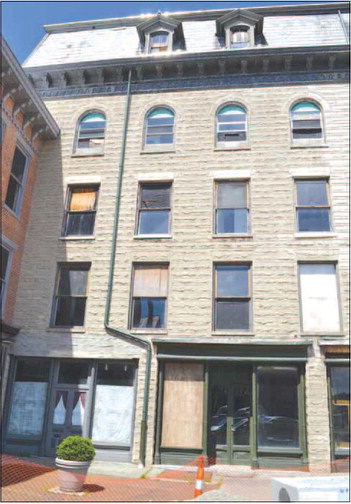
View video of the announcement on WHIO's website There were many points in the last five years that community partners thought ‘Legacy Place’ might never happen. It took time to capture nearly $13 million in funding sources, including historic tax credits – not to mention delays due to the pandemic. But on Thursday, partners announced the funds were released and they are able to move forward with the project. It’s possible construction could start within the next week. ‘Legacy Place’ transforms the Douglas Inn in downtown Urbana and two former elementary schools (North & South) into affordable senior housing. 51 units will be created for those 55 and older, with six of them being devoted to people with disabilities. “It’s just a real renaissance for Urbana,” Mayor Bill Bean told News Center 7′s Jenna Lawson. Duane Miller, with development company Flaherty & Collins and also president of F & C Legacy Place, said the project accomplishes two goals: turning three vacant properties into useful properties and filling the need for affordable senior housing in Urbana. “I love to jump into the skin of a community that’s looking for help and looking for opportunities to spur on their own development,” he said. The Douglas has been vacant since 2004 and has long been a large eyesore on the southwest corner of Monument Square. The building has somewhat deteriorated and was the target of multiple arson fires in 2019. The former owner of the property, John Doss, has done work to stabilize the structure. The elementary schools, despite being about 100 years old, are in solid shape, partners said. The timeline for the project will move quickly. Developers estimate about six months to complete both elementary schools and a little over a year to finish the Douglas. Partners are hopeful that the project will have a positive domino effect on other aspects of Urbana living including neighboring businesses and housing. “We may see some of those seniors who may move in here and now their single family homes are available for a new families to move in,” said director of the Champaign Economic Partnership, Marcia Bailey. Bailey added that this solution also preserves the history of all three buildings for the community to enjoy for decades to come. “Having these buildings standing as they are and being repurposed is a huge win for our community,” she said. Other partners in the project include the City of Urbana, Urbana City Schools and Resident Supports and Services, Inc., which provides housing for seniors and adults with developmental disabilities.
By Jenna Lawson, Springfield News-Sun Staff Writer
The last bit of needed funding has been secured to push forward the ‘Legacy Place’ senior housing project in Urbana. Sourcing all of the funding has been a tedious multi-year task undertaken by several different parties — but soon residents will start to see the fruits of labor. “This is going to be a reality,” said Champaign Economic Development Director Marcia Bailey. “It’s not just sketches on a piece of paper. It’s going to be a reality.” In August, the developers of the project — Flaherty & Collins Properties — applied for a grant through the Federal Home Loan Bank of Cincinnati with the help of community partners.
“(The developer) has indicated to us if they’re able to secure that grant, then they can move forward toward a closing to this project,” said Doug Crabill, Urbana’s community development manager.
Crabill, as well as Marcia Bailey, director of Champaign County Economic Development, have been working with Flaherty & Collins Properties, a developer based in Indianapolis that has expressed interest in the project, to secure the funding for “Legacy Place.” The project would convert the Douglas Hotel, as well as the former North and South Elementary Schools in Urbana, into affordable senior apartments. Click here to read full article on SpringfieldNewsSun.com.
“It’s exciting that another piece of the puzzle has been approved for funding,” said Champaign Economic Partnership Executive Director Marcia Bailey. “Nothing is finalized yet, and we’re not quite ready to sign for the property, but the city, Urbana City Schools and the CEP have done everything we can on our end and now we’re continuing to work with Flaherty & Collins to get this project to the final stages.” According to ODSA, Legacy Place is only the second project to be awarded in Urbana. The awards are planned to assist private developers in rehabilitating historic buildings in downtowns and neighborhoods that, once rehabilitated, drive further investment and interest in adjacent property. “The historic preservation tax credit is another way we’re investing in our communities,” said Gov. Mike DeWine in a news release. “These investments can spur development in a neighborhood or downtown.” “Partnering with communities and developers across Ohio, we’re preserving historic sites that make Ohio unique,” said Lydia Mihalik, director of ODSA. “We’re creating new opportunities for small businesses and housing.” The Ohio Historic Preservation Tax Credit program is administered in partnership with the Ohio History Connection’s State Historic Preservation Office. The state Historic Preservation Office determines if a property qualifies as a historic building and if the rehabilitation plans comply with the U.S. Secretary of the Interior’s Standards for Rehabilitation. Legacy Place Bailey said that in addition to providing a built-in customer base for downtown business owners, the project will be an example for the Moving Downtown Forward committee to inform developers how to move projects ahead in downtown Urbana. According to information from the ODSA, the Douglas Inn was constructed about 1870 in the Second Empire style with a mansard roof. The structure has been vacant since 2004. When ready to complete the sale of property, Flaherty & Collins will work directly with private owner John Doss to acquire the Douglas Inn. “Just seeing the Douglas get put back into use again is a very positive thing for the community,” said Community Development Manager Doug Crabill. “Seeing those school buildings be reused rather than being torn down and vacant lots gives us a good feeling, because at least we know there is a plan for re-purposing those buildings.” “It’s something we’re used to doing and we feel like there’s usually an extra need for senior housing in communities, and in communities like Urbana there’s a need to help older (buildings) continue their life,” said Julie Collier, vice president of Development for Flaherty & Collins Properties. “It’s two-fold for us because we’ll help save some important buildings in … Urbana, and we’ll also fulfill a housing need for local residents.” The two schools, built in 1901 and 1921, served the city’s children until they became vacant in 2018. Bailey said the Ohio Revised Code allows the school district to dis-invest of the two properties no longer needed by the school district. Rather than demolish the buildings, the plan is for them to be purchased by the city for $1 each under an alreadysigned purchase agreement. Then the CEP will act on behalf of the city to sell the buildings to Flaherty and Collins. “The city council agreed to do all of this,” said Bailey. “We had the city schools that were willing because they didn’t want to see the buildings (demolished) either, and it’s a cost savings for taxpayers not to have to pay for the demolition. But the city council agreed that they will take on the buildings … That was an important component, because if the city had not agreed to do that we wouldn’t be where we’re at right now.” On March 19, the Urbana City Council unanimously passed a resolution of support for the developers of Legacy Place to apply to the Ohio Historic Preservation Tax Credit Program. Flaherty & Collins also obtained tax credits through the Ohio Housing Finance Agency.
‘Legacy Place’ project in Urbana receives almost $1M in funding from state tax credit
The project, called Legacy Place, would create 51 housing units available to residents 55 and older. “We are super excited, this was a big hurdle and achieving this credit is a really exciting achievement,” said Marica Bailey, Director of the Champaign Economic Partnership. “We are ready to move forward with this process.” MORE: Plan might find new use for Douglas Hotel, longtime Urbana eyesore While funding for the project has been secured, Bailey said, the project is still a work in progress. “There is no start time,” Bailey said. “This project is still in the making, but this is a big step in the making.” The Ohio Historic Preservation Tax Credit is administered in partnership with the Ohio History Connection’s State Historic Preservation office and the Ohio Development Services Agency. The credit is awarded to, “assist private developers in rehabilitating historic buildings in downtown and neighborhoods.” “Partnering with communities and developers across Ohio, we’re preserving historic sites that make Ohio unique,” Lydia Mihalik, director of the Ohio Development Services Agency, said in a news release. “We’re creating new opportunities for small businesses and housing.” The Legacy Place project is just one of 22 projects awarded the tax credit. In total, the Ohio Department of Services Agency awarded more than $28 million for the rehabilition of 49 historic buildings, according to the ODSA. Under the Legacy Place project, the city of Urbana has agreed to take ownership of the two elementary school buildings and transfer them to the Champaign Economic Partnership. The CEP will then transfer the two buildings to Flaherty and Collins. The next step in the Legacy Place project since receiving the credit, will be to work on transferring and finalizing property agreements, Bailey said. “We are going to be meeting up and working through the fine details of the project and finalizing some of the purchasing agreements and stuff like that in the coming months,” Bailey said. The former Douglas Hotel is privately owned by John Doss, who plans to work out a separate agreement with the company. Doss said previously that he purchased the Douglas with plans to eventually restore it, although it’s been a slow process to track down funding and find a suitable project. The former hotel has been vacant for more than a decade and city officials have said in the past they believe the building is an eyesore downtown. Turning the site into senior housing will encourage more residents to live downtown and create new opportunities for retailers, Bailey said. “This is going to have a tremendous impact and the making of this has been an incredible effort,” Bailey said. Thank you for reading the Springfield News-Sun and for supporting local journalism. Subscribers: log in for access to your daily ePaper and premium newsletters.
$988,058: Total tax credit the Legacy Place project has received as a part of the Ohio Historic Preservation Tax Credit 51: Housing units for residents 55 and older the Legacy Place project will create 3: Total properties involved in the senior housing plan- 2 elementary schools and the Douglas Hotel The Springfield News-Sun is committed to covering economic developments in Clark and Champaign counties. |
Archives
February 2024
Categories
All
|
 RSS Feed

|
CEP Office Location:
40 Monument Square, Suite 306 Urbana, Ohio 43078 937-653-7200 |
All drone photography courtesy of Jassen Dobyns of UAVisions LLC. Additional photography courtesy of Dave Millner of the Champaign Camera Group.
Website by Berry Digital Solutions, LLC Urbana, Ohio |
Click on the logos for more information.
|

|

|

|

|

|

|


|