
When recruiting for jobs that require specialized skills, employers compete for a limited pool of qualified candidates. Ohio’s Registered Apprenticeship program, available locally through OhioMeansJobs Champaign County (OMJCC), helps employers overcome this challenge and build their skilled workforce from within.
“It’s probably the best way to supply employers a pipeline of reliable, skilled employees,” says Andrea Mitchell, business services representative of OMJCC. Through the Registered Apprenticeship program employers provide proven, valued employees the opportunity to learn new skills through structured on-the-job training that meets industry standards, aligned with technical instruction from an approved school – all while getting paid. “Apprentices earn a livable wage as they learn,” Mitchell says. The Rittal North America facility in Urbana currently has three employees enrolled in the apprenticeship program, with a fourth possibly beginning in early 2021, says Dan Yohey, quality engineer and manager of apprenticeships at Rittal. Rittal has one industrial engineering apprentice, David Vanderveen, an assembler with the company for six years, and two maintenance technician apprentices, Billy Warren and Malik Tanksley, who have been at Rittal for less than two years. Vanderveen started his apprenticeship in late February 2020, and Warren and Tanksley, in late May 2020. All three are enrolled in 8,000-hour/four-year programs at Clark State Community College, with which Rittal has previously partnered with for internships. The length of apprenticeships varies by industry and occupation. The apprentices are completing on-the-job training under the supervision of mentors, who are among 10 Rittal engineers, managers and senior technicians who completed mentorship training developed for Rittal by Clark State. The Registered Apprenticeship program is employer-driven. This means, says Mitchell, that employers:
After developing its apprenticeship training program, in partnership with Clark State and OMJCC, Rittal took the plan to the Greater Ohio Workforce Development Board, Inc. (GOWBI) for approval and certification. As the apprenticeship sponsor, GOWBI conducts audits and other administrative services on behalf of Rittal. In addition to benefitting the company and apprentices, Yohey says, “The apprenticeship program sends a message to the rest of the workforce in the plant that, based on the success of these individuals, that we’re walking the walk and offering career advancement opportunities at Rittal—not just longevity. It boosts morale.” The apprenticeships also benefit the mentors, Frost says. Serving as mentors “is their next progression on that ladder of moving up…. You invest the time and money to send them through the training, and it says, ‘We trust you, and you’re on your way up.’” Apprenticeships increase employee retention rates, according to the U.S. Department of Labor. And they reduce the time invested in recruiting skilled employees – in competition with other employers – and orienting them to the culture, products and processes of a new workplace. “It’s a lot easier to develop your skilled workforce rather than competing with other companies and bringing them in from the outside,” Yohey said. “It’s pretty competitive right now. The need for technicians and engineers, it’s pretty cutthroat.” Frost adds, “When we onboard a new engineer, we look at from six to 12 weeks before they bring any value, just because they’re trying to learn what we do. When we bring up somebody from in the company, the learning curve is so much less, and we can get right to the technical aspects of their training. They’re instantly bringing some value.” To learn more about the Registered Apprenticeship program, call OhioMeansJobs Champaign County at 937-484-1581. OMJCC is available to provide employers presentations – onsite or virtually – about the Registered Apprenticeship program and other OMJCC workforce training services. Three Businesses to Move in Next Fall
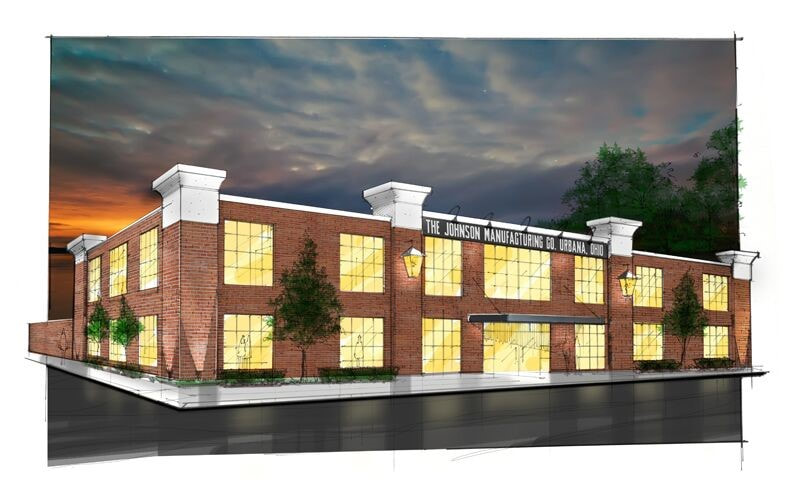
Once work is completed, TIS – a minority-owned, full-service commercial inspection, engineering and construction management company – will occupy the building’s second floor, moving from its current South Main Street location.
Community Health & Wellness Partners (CHWP), which offers a full range of primary medical care including behavioral health services in Bellefontaine, Indian Lake and West Liberty, will open a newly approved Urbana location on the first floor of 605 Miami St. by late fall 2021. The Health Resource Service Administration has also granted CHWP approval to open a school-based health center in West Liberty-Salem Schools in early 2021, CHWP President/CEO Tara Bair said. The third business – The Door Shop, a commercial door and hardware distributor – will have light manufacturing and warehouse operations at the site. The former Q3 JMC building is the fourth major vacant structure in Urbana to be given a new lease on life this fall. It joins the Douglas Hotel and the former Urbana North and South Elementary Schools, which are being restored and renovated for FC Legacy Place, a total of 51 affordable senior apartments. “Both projects have moved forward thanks to strong public-private partnerships, of government and business working together to obtain the necessary funding and provide the expertise to bring plans to reality,” said Marcia Bailey, director of the Champaign Economic Partnership (CEP), Champaign County’s economic development agency. Bailey credits the Champaign County Board of Revision for helping set the wheels in motion for the Q3 JMC project when it approved in 2015 the City of Urbana’s request to obtain the property free of unpaid back property taxes and other encumbrances after no one bid on the property at a sheriff’s sale. The city took ownership of the 20-acre site in 2017, said Doug Crabill, community development manager who has managed the project for the city. After that the city pursued redevelopment of the property, to clear it of contamination and prepare it for development by new owners. Bailey assisted the city in reaching an agreement with TIS, the city’s development partner, to oversee the site cleanup and redevelopment. “They were the only company that came forward with interest in renovating the building and turning the brownfield into a greenfield for business development,” Bailey said. “Without them, I wouldn’t have been able to find an end user for the property because of the contamination that had to be removed.” On behalf of TIS, Bailey wrote an application for a JobsOhio Site Redevelopment Pilot Program grant to help fund the work. JobsOhio, encouraged by the number of community partners involved, awarded TIS a reimbursable grant of $883,947 to help cover the cost of demolition, environmental remediation, asbestos abatement, removal and disposal of waste, and site preparation. The city provided $348,435 in matching funds, and TIS contributed $116,145. TIS has acquired 12.6 acres on the east side of the 20-acre redevelopment site, including the Q3 JMC building. The remaining portion of the 20-acre site is being readied to be marketed for business development, Crabill said. Timm said TIS’s new location will “help take us to the next step in the growth of our company, to hire more personnel and expand our operations.” In addition, he said, some of the 12.6-acre parcel that the former Q3 JMC building sits on will be developed for sale to other businesses. “The building will be an anchor for future development on the rest of the property, restore jobs lost when Q3 JMC closed, and generate tax revenue for our community,” Bailey said. Kerry Brugger, Urbana’s director of administration, said, “We’re excited to see the building come back into productive use. It’s a great project for our community. It eliminates a severe safety and health nuisance for the community and will retain and create jobs.” Of TIS, he said, “It’s been a pleasure working with them. They’ve been an excellent partner to work with.”  Click to visit soche.org/vcf to Register. |
Archives
February 2024
Categories
All
|

 RSS Feed

|
CEP Office Location:
40 Monument Square, Suite 306 Urbana, Ohio 43078 937-653-7200 |
All drone photography courtesy of Jassen Dobyns of UAVisions LLC. Additional photography courtesy of Dave Millner of the Champaign Camera Group.
Website by Berry Digital Solutions, LLC Urbana, Ohio |
Click on the logos for more information.
|

|

|
|

|

|

|



|